

WTV meaning has become essential knowledge for anyone navigating modern digital communication. This popular texting abbreviation represents “whatever” and appears constantly across social media platforms, group chats, and gaming communities worldwide.
Understanding internet slang like WTV helps you communicate effectively in casual texting environments. Whether you’re chatting on Snapchat, posting on TikTok, or messaging friends, knowing what does WTV mean ensures you never miss the context or tone behind messages.
What Does WTV Mean?
WTV is a widely-used texting acronym that stands for “whatever” in online chat slang. This shorthand expression conveys indifference, flexibility, or casual agreement depending on context. It’s part of modern informal communication used by millions daily.
The WTV definition encompasses multiple meanings based on conversational tone. Sometimes it signals genuine openness to options, while other times it expresses mild annoyance or disinterest. Understanding these nuances matters in texting etiquette and avoiding miscommunication.
Read Also This: https://celebsmeaningcom.com/gng-meaning/
Origins and Evolution of WTV
The origins of WTV trace back to early 2000s text messaging when character limits encouraged creative abbreviations. As texting abbreviations evolved, people sought faster ways to express common phrases, leading to social media shorthand becoming mainstream communication.
WTV gained momentum alongside other modern slang terms as smartphones and messaging apps exploded in popularity. Platforms like Snapchat, Instagram, and TikTok accelerated its adoption, making it standard vocabulary in digital communication across generations and demographics globally.
WTV on Snapchat and Social Media
On Snapchat and similar platforms, WTV functions as quintessential Snapchat slang for quick responses. Users frequently deploy this casual texting phrase when replying to plans, suggestions, or questions where they’re genuinely flexible or unbothered about outcomes.
TikTok slang incorporates WTV in comments, captions, and direct messages constantly. The meaning of WTV in chat remains consistent across platforms, though context clues help determine whether it’s positive, neutral, or slightly negative in tone and intention.
How to Use WTV
Using WTV effectively requires understanding conversational context and relationship dynamics. This texting acronym works best in informal communication settings where brevity and casualness are valued. Timing and tone significantly influence how recipients interpret your message meaning.
The key to mastering WTV lies in recognizing appropriate situations. Consider your audience, the conversation’s seriousness, and potential misinterpretations.
When used thoughtfully, WTV enhances digital communication by conveying relaxed attitudes without lengthy explanations or justifications.
In Casual Chats
Casual chats between friends represent ideal environments for WTV. When discussing dinner plans, movie choices, or weekend activities, responding with WTV signals you’re easy-going and open to suggestions without strong preferences either way today.
In Group Conversations
Group conversations frequently feature WTV as participants coordinate plans or decisions. Using this group chat term shows flexibility when multiple opinions clash, helping move discussions forward without creating conflict or appearing difficult about minor details constantly.
In Gaming Communities
Gaming communities embrace WTV alongside other gaming slang like LFG (looking for group) and DTM (doing too much). Gamers use WTV when selecting maps, game modes, or team compositions, indicating they’re adaptable and focused on playing together.
When To Use WTV
When to use WTV depends on relationship comfort levels and conversational formality. Use it with friends, peers, or familiar colleagues when discussing low-stakes topics. It’s perfect for expressing genuine flexibility about plans, food choices, entertainment options, or casual decisions.
Deploy WTV when you genuinely don’t mind outcomes or want to appear easy-going. It works well in social posts responding to polls, questions, or suggestions where you’re truly indifferent but want to acknowledge participation without lengthy responses.
| Situation | Appropriate? | Reason |
| Friend asking about dinner plans | ✅ Yes | Shows flexibility in casual settings |
| Boss requesting project deadline | ❌ No | Too informal for professional contexts |
| Group chat choosing movie | ✅ Yes | Perfect for low-stakes group decisions |
| Parent asking about family event | ⚠️ Maybe | Depends on family communication style |
| Gaming teammate selecting map | ✅ Yes | Common in gaming communities |
When Not To Use WTV
When not to use WTV includes professional emails, formal conversations, or sensitive discussions. Avoid it when communicating with authority figures, during serious topics, or in situations requiring thoughtful engagement rather than casual indifference or perceived dismissiveness.
Skip WTV when someone shares important news, seeks genuine advice, or discusses emotional matters. Using it inappropriately may seem dismissive or disrespectful, damaging relationships and conveying you don’t care about the conversation’s substance or significance.
Situations to avoid WTV:
- Professional workplace communications
- Conversations with parents or elders
- Serious relationship discussions
- When someone shares problems or concerns
- Academic or formal settings
- First-time conversations with new people
- When cultural differences might cause misunderstanding
Is WTV Polite or Rude?
Is WTV polite or rude depends entirely on context, tone, and relationship dynamics. When used appropriately between friends discussing casual topics, it’s perfectly acceptable informal communication.
However, it can appear dismissive or apathetic in wrong situations clearly.
The question of rude vs polite texting with WTV hinges on interpretation. Some people view it as relaxed and flexible, while others perceive it as disinterested or slightly annoyed.
Consider your audience’s communication preferences before using potentially ambiguous internet slang regularly.
Examples of WTV in Conversations
Examples of WTV in conversations illustrate how context shapes meaning. Real-world slang examples demonstrate the abbreviation’s versatility across different platforms and situations. Observing various uses helps develop intuition about appropriate timing and tone for this popular expression.
These examples of WTV showcase both positive and potentially negative interpretations. Notice how surrounding words, punctuation, and conversation history influence whether WTV sounds friendly, neutral, or dismissive in actual messaging scenarios and everyday digital interactions.
In Texting
In texting scenarios, WTV appears frequently in one-on-one conversations:
- “Want pizza or burgers?” / “WTV you prefer!”
- “Should we meet at 7?” / “WTV works for you”
- “Did you finish the homework?” / “WTV, I’ll do it later”
- “Can you help me?” / “WTV” (potentially dismissive)
In Social Posts
In social posts across platforms, WTV functions as shorthand commentary:
- Instagram story poll response: “Beach or mountains?” → “WTV honestly 😊”
- TikTok comment: “Who’s better?” → “WTV they’re both good”
- Twitter reply: “Thoughts on the new update?” → “WTV, doesn’t bother me”
In Everyday Dialogue
In everyday dialogue, WTV seamlessly integrates into natural conversation flow. Friends discussing weekend plans might say “WTV you guys want to do” or “I’m down for WTV” showing genuine flexibility and easy-going attitudes toward group activities.
Alternatives and Synonyms for WTV
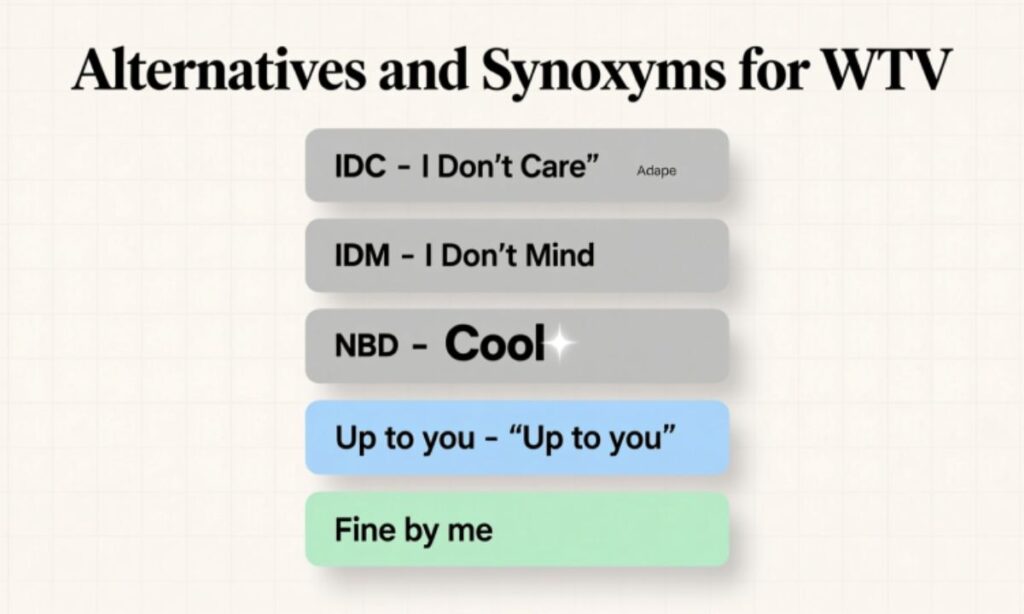
Alternatives and synonyms for WTV provide variety in digital communication. IDC (I don’t care), IDM (I don’t mind), and IDK (I don’t know) serve similar purposes with slightly different connotations. These alternatives to WTV help express flexibility without repetition.
| Alternative | Meaning | Usage Context |
| IDC | I don’t care | More direct indifference |
| IDM | I don’t mind | Polite flexibility |
| NBD | No big deal | Casual dismissal |
| Cool | Agreement | Simple acceptance |
| Up to you | Your choice | Deferring decision |
| Fine by me | Agreement | Polite acceptance |
Other casual texting phrases include “doesn’t matter,” “sure,” “cool,” or “up to you.” Each carries subtle differences in tone and engagement level.
Choosing appropriate texting abbreviations based on relationships and situations demonstrates strong communication tone & context awareness.
Read Also This: https://celebsmeaningcom.com/what-does-wyo-stand-for-in-text/
Frequently Asked Questions
What does WTV mean in texting?
WTV stands for “whatever,” used to show indifference or flexibility.
How do you pronounce WTV in a voice search?
Most people say “double-u tee vee” or simply “whatever.”
Is WTV rude to use in messages?
It can seem dismissive depending on tone, so use it carefully.
What does someone mean when they reply WTV?
They usually mean they don’t care much about the choice or outcome.
Is WTV the same as saying whatever?
Yes, WTV is just the shorthand version of “whatever.”
When should I use WTV in a conversation?
Use it when you’re flexible or uninterested in making a decision.
What’s the difference between WTV and W/E?
WTV means “whatever,” while W/E means “whatever” but is a bit less common now.
Why is WTV trending in 2025 and 2026?
It’s quick to type and fits the casual tone of modern texting.
Can WTV be used in professional messages?
It’s too informal for professional communication and might seem careless.
Does WTV change meaning based on context?
Yes, it can mean indifference, agreement, or mild frustration depending on the conversation.
Conclusion
Understanding WTV meaning empowers better digital communication across all platforms and contexts. This versatile texting abbreviation remains valuable when used appropriately, enhancing casual conversations while maintaining brevity and expressing genuine flexibility in low-stakes situations effectively.
Mastering internet slang like WTV requires awareness of texting etiquette and relationship dynamics. By recognizing when this shorthand enhances or harms communication, you’ll navigate social media conversations confidently, expressing yourself clearly while respecting conversational norms always.

