

Understanding oyasumi meaning opens doors to authentic Japanese greetings and cultural connection. This essential Japanese word for goodnight reflects respect, warmth, and social awareness in daily conversation.
Learning how to say goodnight in Japanese properly enhances communication skills and cultural appreciation.
Mastering oyasumi meaning requires understanding context, formality levels, and appropriate timing.
Whether you’re learning Japanese phrases for beginners or deepening your knowledge of Japanese cultural etiquette, this guide covers everything about this beloved bedtime phrase. Explore formal and casual Japanese greetings to communicate naturally.
What Does Oyasumi Mean in Japanese?

Oyasumi (おやすみ) translates directly to “goodnight” in casual Japanese speech. This Japanese greeting combines the honorific prefix “o” (お) with “yasumi” (休み), meaning rest or break.
It’s a shortened version of the more formal Japanese speech phrase “oyasuminasai.” Understanding what does oyasumi mean helps learners grasp Japanese politeness levels and appropriate usage contexts.
The word stems from the verb yasumu (休む), which means to rest, sleep, or take time off. When you say oyasumi, you’re literally wishing someone a peaceful rest.
This Japanese bedtime phrase carries warmth and care, reflecting Japanese social norms around parting expressions and consideration for others’ well-being.
Read Also This: https://celebsmeaningcom.com/jsp-meaning-in-text/
The Origins and Cultural Context of Oyasumi
The oyasumi meaning in Japanese culture extends beyond simple translation. Historically, Japanese expressions for rest emphasized collective harmony and mutual care within communities.
The honorific prefix o (お) adds respect, transforming a simple word into a culturally meaningful gesture that honors Japanese language and culture traditions.
Japanese communication styles value context and relationship dynamics. Using oyasumi appropriately demonstrates understanding of Japanese cultural etiquette and social hierarchy.
This phrase reflects centuries of linguistic evolution, where polite Japanese expressions developed to maintain harmony and show consideration. The word embodies Japanese values of rest, renewal, and interpersonal respect.
When and How to Use Oyasumi Correctly
Timing matters significantly when using this Japanese greeting at night. Understanding when to say oyasumi prevents awkward social situations and demonstrates cultural awareness.
The phrase works best in specific contexts with particular people, following established Japanese social norms and communication patterns.
How to use oyasumi depends on relationship dynamics, setting, and time of day. This casual Japanese speech expression suits informal environments and close relationships.
Mastering appropriate usage shows respect for Japanese language basics and cultural sensibilities, making interactions feel natural and genuine to native speakers.
Before Sleeping
Oyasumi serves as the standard Japanese phrase for sleep when retiring for the night. Family members, roommates, and close friends exchange this Japanese bedtime phrase before heading to bed. It creates a comforting ritual that strengthens bonds and signals the day’s end with warmth and care.
When Parting Late at Night
Beyond bedtime, oyasumi functions as a farewell when parting late at night. If you leave someone’s home after evening hours, saying oyasumi acknowledges the late time and wishes them restful sleep.
This usage demonstrates understanding of Japanese daily conversation nuances and contextual appropriateness in social situations.
Formal vs. Casual: Understanding the Difference
Japanese honorific language operates on distinct formality levels that guide appropriate expression choices. The difference between casual vs formal Japanese significantly impacts how you’re perceived in various social contexts.
Understanding these distinctions helps navigate Japanese workplace language and personal relationships effectively.
Casual Japanese speech like oyasumi suits friends, family, and peers. Formal Japanese speech requires additional honorific elements for superiors, elders, or professional settings.
This linguistic hierarchy reflects deep-rooted cultural values about respect, age, and social position within Japanese language and culture.
Oyasumi vs. Oyasuminasai
The comparison oyasumi vs oyasuminasai highlights formality differences in Japanese greetings. Oyasuminasai (おやすみなさい) includes the polite command form “nasai” (なさい), making it appropriate for formal situations.
This polite Japanese expression works with acquaintances, colleagues, seniors, or when showing extra respect.
| Expression | Formality Level | Best Used With | Context |
| おやすみ (Oyasumi) | Casual | Family, close friends, peers | Informal settings, personal relationships |
| おやすみなさい (Oyasuminasai) | Polite/Formal | Colleagues, acquaintances, elders | Professional settings, respectful situations |
Oyasumi demonstrates comfort and closeness, while oyasuminasai maintains professional boundaries. Choosing correctly between these Japanese greetings shows cultural competence and social awareness. The distinction matters greatly in Japanese cultural etiquette, affecting how others perceive your respect and understanding.
Want to explore Japan’s culture?
Exploring Japanese language and culture enriches your understanding beyond basic phrases. Immersing yourself in Japanese communication styles through media, literature, and conversation builds authentic fluency.
Learning Japanese greetings serves as your gateway to deeper cultural appreciation and meaningful connections.
Japanese vocabulary building extends naturally when you engage with native content. Watching anime, reading manga, or listening to Japanese music contextualizes Japanese phrases for beginners within real-world usage.
This approach reveals Japanese language cultural nuances that textbooks often miss, making learning enjoyable and effective.
Beyond Bedtime: Other Uses of Yasumu
The root verb yasumu (休む) appears throughout Japanese daily conversation in various contexts. Understanding these Japanese verbs for rest and sleep expands your conversational range beyond nighttime farewells.
This versatile word family demonstrates the interconnected nature of Japanese vocabulary and cultural concepts surrounding rest.
Japanese expressions for taking a break frequently incorporate yasumu and its related forms.
The concept of rest permeates Japanese culture, from workplace breaks to vacation planning. Recognizing these patterns strengthens your grasp of Japanese language basics and prepares you for diverse conversational situations.
Taking Time Off
Yasumi (休み) as a noun means “holiday,” “day off,” or “break” in Japanese workplace language. Employees might say “kyou wa yasumi desu” (今日は休みです) meaning “Today is my day off.” This usage connects to the original yasumu verb meaning of taking rest from work or activities.
Indicating Absence
When someone is absent, yasumu indicates they’re “taking a break” or “not coming.” For example, “gakkou wo yasumu” (学校を休む) means “to be absent from school.” This practical application of Japanese verbs for rest and sleep appears frequently in everyday situations, from classrooms to offices.
Common Alternatives in Formal Settings
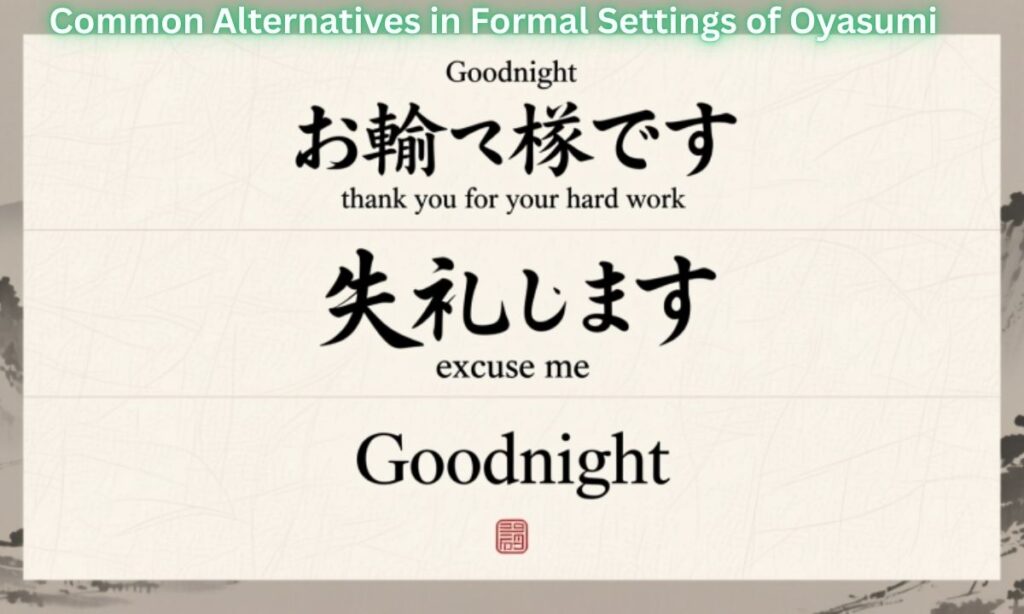
Formal Japanese speech environments require alternative expressions beyond basic goodnight phrases. Japanese workplace language emphasizes respect through carefully chosen parting words.
Understanding these polite Japanese expressions prevents unintentional rudeness and demonstrates professional maturity in business contexts.
Professional settings utilize phrases like otsukaresama deshita (お疲れ様でした), meaning “thank you for your hard work,” when leaving the office at night. While not directly meaning goodnight, it functions as an appropriate evening farewell.
These formal Japanese greetings acknowledge colleagues’ efforts and maintain workplace harmony.
Another option includes shitsurei shimasu (失礼します), a respectful phrase meaning “excuse me” when departing.
Combined with timing context, it serves as a professional evening goodbye. Mastering these Japanese social norms elevates your communication skills beyond basic Japanese phrases for beginners.
How to pronounce oyasumi?
Proper pronunciation ensures your Japanese greeting sounds natural and respectful. Oyasumi breaks down phonetically as “oh-yah-soo-mee” with equal emphasis on each syllable.
The “o” sounds like “oh,” “ya” like “yah,” “su” like “sue,” and “mi” like “me” with a short vowel sound.
Avoid common mistakes like rushing syllables or adding extra emphasis. Japanese pronunciation maintains consistent rhythm across syllables, creating a smooth, flowing sound.
Practicing with native speakers or audio resources helps perfect your delivery. Correct pronunciation demonstrates respect for Japanese language and culture while improving comprehension.
Can I use oyasumi to my acquaintances or colleagues?
Using oyasumi with acquaintances or colleagues depends on relationship dynamics and formality expectations. Generally, casual Japanese speech isn’t appropriate for Japanese workplace language or professional relationships.
Instead, opt for oyasuminasai or alternative formal Japanese greetings to show proper respect and maintain boundaries.
Japanese cultural etiquette emphasizes hierarchical awareness in professional settings. Unless colleagues have explicitly become close friends outside work, maintain formal language.
This demonstrates understanding of Japanese social norms and prevents uncomfortable situations. When uncertain, choosing formal Japanese speech always proves safer than being too casual.
Can I say oyasumi to my partner?
Oyasumi perfectly suits romantic relationships and intimate partnerships. This casual Japanese speech expression conveys warmth, affection, and comfortable familiarity between partners.
Couples regularly exchange this Japanese bedtime phrase as part of their nightly routine, creating intimate moments that strengthen emotional bonds.
In romantic contexts, oyasumi often accompanies other affectionate expressions. Partners might add terms of endearment or loving messages alongside this goodnight greeting.
The informality signals trust, closeness, and relaxed communication that characterizes healthy relationships within Japanese communication styles and modern dating culture.
Tips for Learning Japanese Greetings
Learning Japanese greetings requires consistent practice, contextual understanding, and cultural awareness. Start with essential phrases like ohayou gozaimasu (おはようございます) for “good morning,” konnichiwa (こんにちは) for “hello,” and konbanwa (こんばんは) for “good evening.” These fundamental expressions form your foundation for Japanese daily conversation.
Immerse yourself in authentic Japanese language and culture through varied resources:
- Watch Japanese dramas and anime with subtitles to observe natural Japanese greetings in context
- Practice with language exchange partners to receive real-time feedback on pronunciation and usage
- Use spaced repetition apps for consistent Japanese vocabulary building and retention
- Study Japanese grammar basics to understand why phrases are structured certain ways
- Read children’s books in Japanese to encounter simple, clear examples of polite Japanese expressions
- Listen to Japanese podcasts focused on Japanese phrases for beginners and cultural explanations
- Join online communities dedicated to Japanese language basics for support and resources
Understanding verb conjugation patterns helps you recognize how words like yasumu transform across different contexts.
Study Japanese politeness levels systematically to navigate social situations confidently. Pay attention to Japanese honorific language structures that signal formality and respect.
Expanding Your Japanese Vocabulary
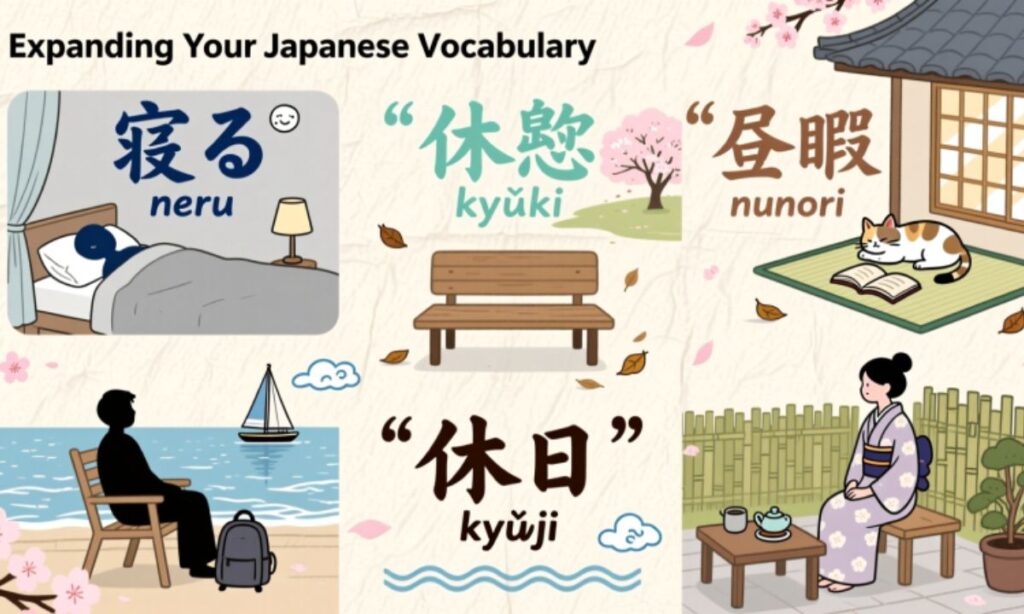
Beyond greetings, comprehensive Japanese vocabulary building creates conversational fluency. Focus on thematic word groups like Japanese expressions for rest, Japanese verbs for rest and sleep, and related daily activities.
This organized approach helps your brain create meaningful connections between new words.
Explore phrases connected to yasumu and rest concepts:
| Japanese | Romaji | English Meaning | Usage Context |
| 寝る | neru | to sleep | Daily bedtime activity |
| 休憩 | kyuukei | break, rest period | Workplace or school breaks |
| 昼寝 | hirune | afternoon nap | Casual rest during day |
| 休日 | kyuujitsu | holiday, day off | Formal term for non-work days |
| 休暇 | kyuuka | vacation, leave | Professional time off requests |
Contextual learning accelerates understanding of Japanese language cultural nuances. Notice how native speakers adjust language based on situation, relationship, and time.
This observation sharpens your intuition about when to say oyasumi versus other parting expressions appropriately.
Practice Japanese daily conversation regularly, even if just with yourself. Create mental scenarios where you’d use different Japanese greetings throughout the day. This mental rehearsal prepares you for real interactions while reinforcing Japanese communication styles naturally.
Study Japanese cultural etiquette alongside language learning for holistic understanding. Language and culture intertwine inseparably, knowing why certain phrases exist enhances retention and appropriate usage. Understanding cultural context transforms mechanical memorization into meaningful communication.
Invest time in mastering Japanese language basics like hiragana, katakana, and essential kanji characters. Reading ability unlocks authentic materials and deepens comprehension of word origins. Recognizing that oyasumi (おやすみ) contains yasumu (休む) enriches your understanding of related vocabulary.
Connect with native speakers through language exchange platforms or local Japanese communities. Real conversations provide invaluable practice with formal and casual Japanese greetings, immediate feedback, and cultural insights textbooks cannot offer. These interactions build confidence and authentic fluency.
Read Also This: https://celebsmeaningcom.com/fn-meaning-in-text/
Frequently Asked Questions
What does “oyasumi” mean in Japanese?
“Oyasumi” means “good night” in Japanese and is used when someone is going to sleep.
When do Japanese people say oyasumi?
Japanese speakers say “oyasumi” at night before going to bed or when parting late in the evening.
Is oyasumi formal or casual?
“Oyasumi” is casual, while “oyasumi nasai” is the more polite and respectful form.
Can I say oyasumi to friends?
Yes, “oyasumi” is commonly used with friends, family, and people you are close to.
What is the difference between oyasumi and oyasumi nasai?
“Oyasumi” is informal, while “oyasumi nasai” sounds more polite and gentle.
Do Japanese people say oyasumi over text?
Yes, “oyasumi” is often used in text messages and chats before sleeping.
Can oyasumi be used romantically?
Yes, couples often use “oyasumi” to wish each other a sweet and caring good night.
Is it okay to say oyasumi to strangers?
It’s better to use “oyasumi nasai” or avoid it with strangers unless the setting is very casual.
How do you pronounce oyasumi correctly?
It is pronounced oh-yah-soo-mee, with even and soft syllables.
Does oyasumi mean goodbye?
Not exactly; it specifically means “good night” and implies going to sleep rather than a general goodbye.
Conclusion
Mastering oyasumi meaning empowers you to communicate naturally in Japanese daily conversation. This essential Japanese bedtime phrase represents more than translation, it embodies cultural values of care, respect, and appropriate social interaction.
Understanding formal and casual Japanese greetings enhances every relationship.
Continue exploring Japanese language and culture through consistent practice and cultural immersion.
From oyasumi to broader Japanese vocabulary building, each phrase learned strengthens your communication abilities. Embrace Japanese cultural etiquette principles to speak with confidence, authenticity, and cultural sensitivity that native speakers appreciate and respect.

