
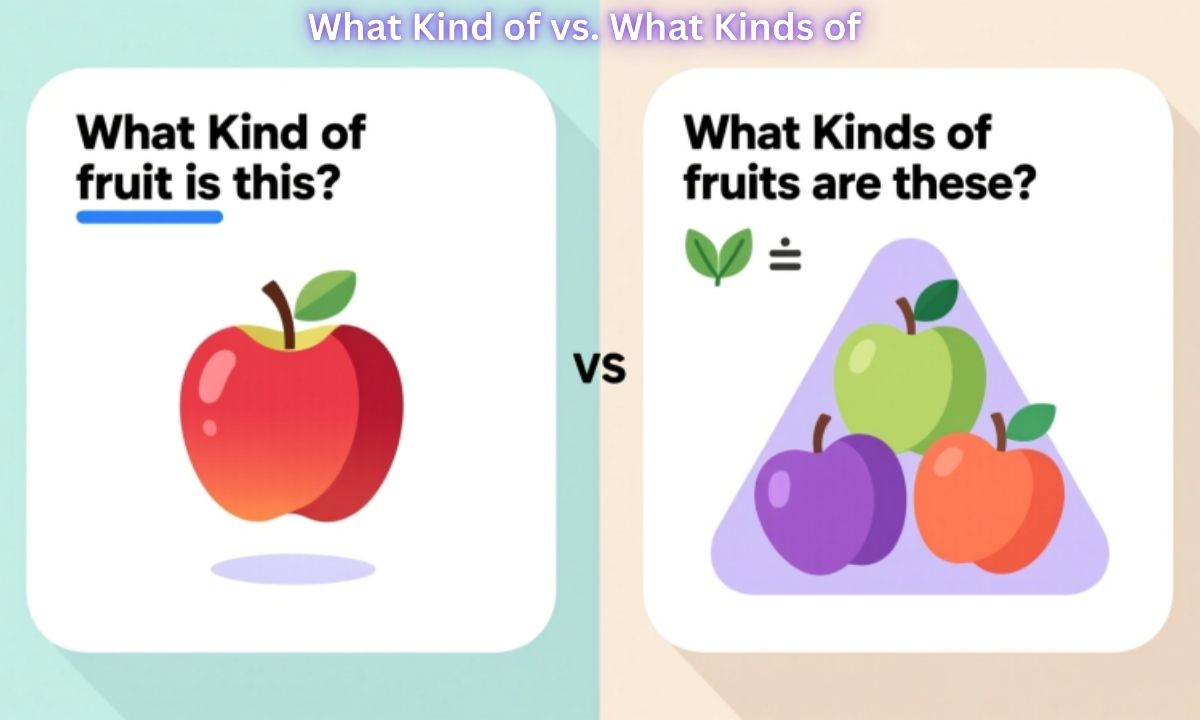

Understanding the difference between what kind of vs what kinds of is crucial for mastering English grammar and achieving fluency in English. These phrases may appear interchangeable, but they serve distinct grammatical purposes based on singular vs plural nouns.
Grasping this distinction improves your communication skills, whether you’re engaging in spoken English, formal writing, or everyday conversation with native speakers.
Both phrases relate to question formation in English and depend heavily on subject-verb agreement and the noun type you’re addressing. While what kind of targets a specific classification, what kinds of explores multiple categories.
This article unpacks their differences, provides real-life examples, and helps ESL learners avoid common grammar mistakes while building stronger language learning foundations and correct usage habits.
What Kind of
What kind of is used when you’re asking about a single type or category within a singular context. It pairs naturally with singular nouns and uncountable nouns like “music,” “food,” or “advice.”
This phrase narrows the focus to one specific classification, making it ideal for academic writing and formal writing where precision matters.
When you ask, “What kind of car do you drive?” you’re seeking one particular type, perhaps a sedan, SUV, or coupe.
This structure ensures clarity in English sentence structure and avoids ambiguity. Native speakers often rely on this phrase in conversation skills because it feels natural and direct, especially in professional or casual dialogue.
Read Also This: https://celebsmeaningcom.com/wsp-mean-in-texting/
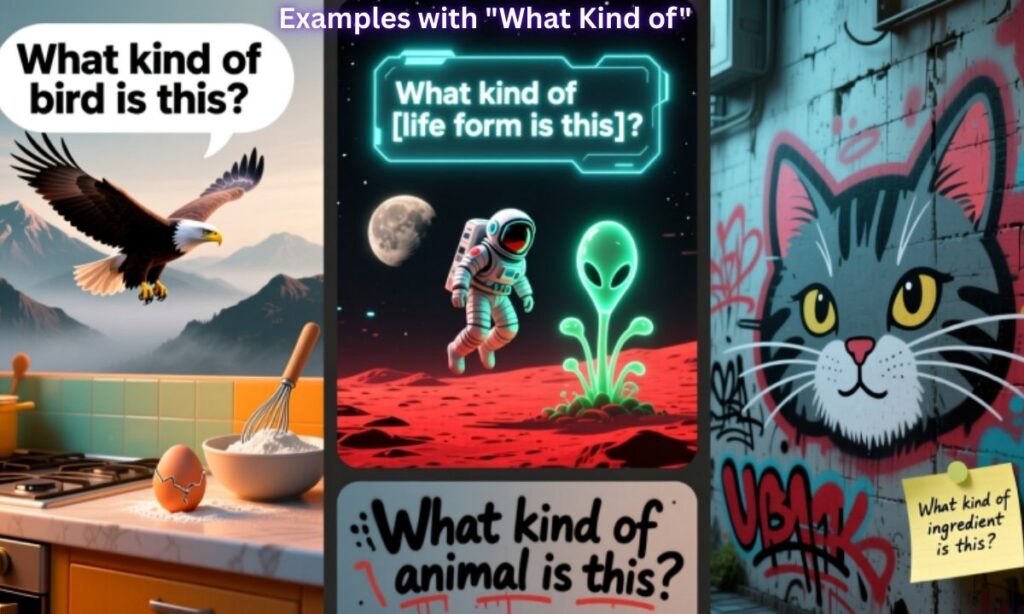
Examples with “What Kind of”
| Sentence | Explanation |
| What kind of music relaxes you? | Focuses on a singular genre like classical or jazz. |
| What kind of advice would you give? | Refers to one specific type of guidance. |
| What kind of weather do you prefer? | Targets a singular preference like sunny or rainy. |
These examples highlight how what kind of works with both countable nouns and uncountable nouns while maintaining grammatical rules. The phrase keeps sentences concise and direct, which is essential for clear expression.
It’s especially useful when the expected answer involves one category rather than multiple options.
What Kinds of
What kinds of applies when discussing multiple types or various categories. It pairs with plural nouns and explores diversity, making it suitable for questions that invite multiple responses.
This phrase broadens the conversation, allowing for exploration of plural forms in English and different classifications simultaneously.
For instance, “What kinds of books do you read?” invites answers like fiction, history, and self-help, multiple categories.
This structure is common in British English vs American English contexts and helps ESL learners understand how verb agreement shifts with plural subjects. It’s particularly useful in idiomatic expressions and discussions involving variety.
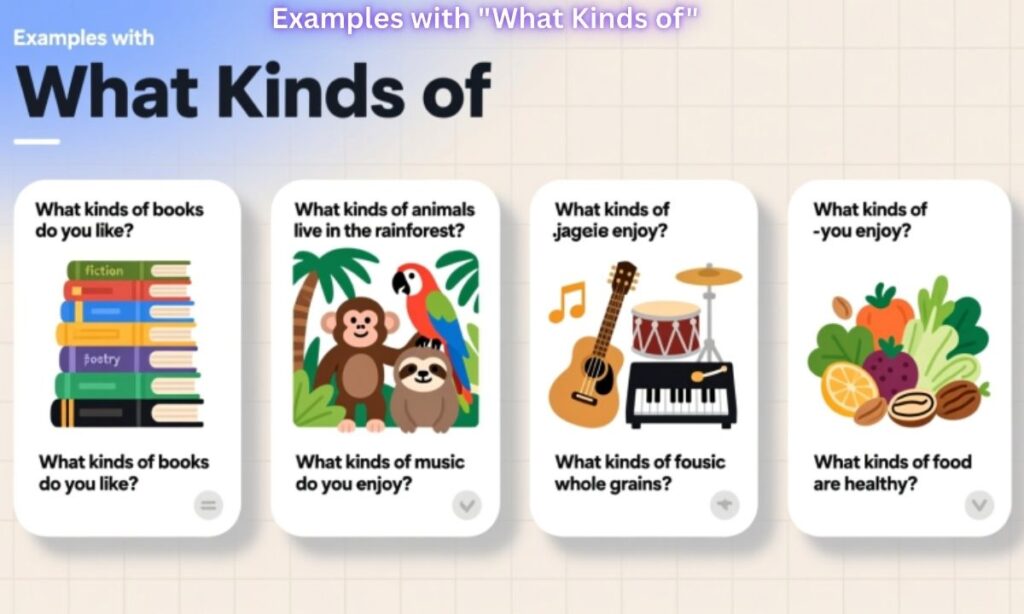
Examples with “What Kinds of”
| Sentence | Explanation |
| What kinds of sports do you enjoy? | Refers to multiple categories like soccer, tennis, and swimming. |
| What kinds of flowers grow in your garden? | Asks about various types such as roses, tulips, and daisies. |
| What kinds of challenges do teams face? | Explores different obstacles like budget, time, or resources. |
These examples demonstrate how what kinds of encourages broader responses and respects plural forms in English. The phrase supports language learning by teaching students to recognize when plurality matters. It’s essential for grammar tips focused on correct usage and subject-verb agreement in complex sentences.
Contextual Understanding
Context determines whether you should use what kind of vs what kinds of. If your question targets a specific type within a singular entity, what kind of is appropriate. Conversely, when exploring multiple categories or variations, what kinds of fits better. Understanding this distinction prevents common grammar mistakes and strengthens communication skills.
In spoken English, native speakers naturally adjust based on context. For example, “What kind of job are you seeking?” focuses on one type, while “What kinds of skills do you have?” explores multiple abilities. Recognizing these nuances improves fluency in English and helps ESL learners navigate question formation in English with confidence and precision.
Common Errors and Misconceptions
Many ESL learners struggle with what kind of vs what kinds of, often using them incorrectly due to overlooking singular vs plural nouns. A common mistake is asking “What kind of hobbies do you have?” when “hobbies” is plural, what kinds of would be correct.
Such errors disrupt subject-verb agreement and confuse listeners in both casual and formal writing contexts.
Another frequent error involves using what kinds of with singular entities. Saying “What kinds of music do you like?” when discussing one genre preference sounds unnatural to native speakers.
Avoiding these mistakes requires attention to grammar rules, countable nouns, and uncountable nouns. Mastering this distinction is a key grammar tip for achieving language proficiency and effective expression.
31 Key Points for What Kind of vs. What Kinds of
- What kind of pairs with singular nouns
- What kinds of matches plural nouns
- Focus on specific type versus multiple categories
- Essential for subject-verb agreement
- Improves English grammar accuracy
- Prevents common grammar mistakes
- Crucial for ESL learners
- Works with countable nouns and uncountable nouns
- Enhances formal writing precision
- Supports academic writing standards
- Natural in spoken English contexts
- Trusted by native speakers
- Strengthens language learning foundations
- Clarifies English sentence structure
- Aids question formation in English
- Involves modifiers and adjectives
- Reflects regional dialects variations
- Differs slightly in British English vs American English
- Common in idiomatic expressions
- Boosts conversation skills
- Essential grammar tips for clarity
- Ensures correct usage in writing
- Builds fluency in English over time
- Context determines appropriate choice
- Misuse creates communication confusion
- Direct impact on verb agreement
- Useful in professional settings
- Helps avoid vagueness in questions
- Improves linguistic precision
- Applicable across writing and speech
- Vital for overall language proficiency
Kind of vs. Kinds of
What kind of vs what kinds of differ fundamentally in application based on singular vs plural nouns. The table below clarifies these distinctions:
| Aspect | What Kind of | What Kinds of |
| Noun Type | Singular nouns | Plural nouns |
| Focus | Specific type | Multiple types |
| Example | What kind of phone is that? | What kinds of phones do you sell? |
| Context | Single classification | Range of categories |
| Verb Agreement | Singular verb | Plural verb |
| Natural Use | One preference | Multiple preferences |
Understanding these differences ensures proper grammar rules application and prevents errors in subject-verb agreement. This comparison supports ESL learners in developing language proficiency and confidence when forming questions in both spoken English and written contexts.
Singular Nouns with Multiple Attributes
Sometimes singular nouns can describe items with multiple attributes, creating confusion about which phrase to use. For instance, “What kind of coffee do you drink?” implies one preference like espresso. However, “What kinds of coffee do you enjoy?” suggests multiple varieties like cappuccino, latte, and mocha, different types within the same category.
This distinction matters in formal writing and academic writing where precision is critical. Recognizing when attributes create plurality helps ESL learners master English grammar and avoid common grammar mistakes. It’s a subtle but important aspect of correct usage that enhances overall communication skills.
Collective Nouns
Collective nouns like “team,” “family,” or “group” typically take what kind of because they represent a singular entity. For example, “What kind of team do you manage?” refers to the overall type, perhaps a sales or marketing team. This maintains subject-verb agreement and respects grammar rules for singular classification.
However, when discussing multiple teams or groups, what kinds of becomes appropriate: “What kinds of teams have you coached?” This shift reflects plural forms in English and demonstrates how context influences question formation in English.
Understanding this helps native speakers and learners alike maintain grammatical accuracy.
Plural Nouns with Singular Classification
Using plural nouns while seeking a singular classification can confuse listeners. Asking “What kind of movies do you like?” technically seeks one genre preference despite “movies” being plural. More naturally, native speakers would say “What kinds of movies do you like?” to invite multiple genre responses like comedy, action, and drama.
This nuance reflects how English sentence structure handles countable nouns and plurality. For ESL learners, recognizing these patterns improves fluency in English and prevents awkward phrasing.
It’s a critical grammar tip for achieving natural-sounding speech and writing in both casual and professional contexts.
Real-Life Dialogues Featuring Both “What Kind of” and “What Kinds of”
Dialogue 1:
- Person A: “What kind of job are you applying for?”
- Person B: “I’m looking for remote work in marketing.”
- Person A: “What kinds of skills do they require?”
- Person B: “Mostly SEO, content creation, and analytics.”
This dialogue demonstrates how what kind of vs what kinds of naturally appears in conversation skills. The first question targets a singular classification, while the second explores multiple categories. Such usage is common among native speakers in spoken English and professional settings.
Dialogue 2:
- Person A: “What kind of music do you play?”
- Person B: “I play classical piano.”
- Person A: “What kinds of pieces do you enjoy most?”
- Person B: “I love Chopin, Beethoven, and some modern composers.”
Here, subject-verb agreement and grammar rules guide the conversation naturally. The phrases help clarify whether one type or multiple categories are being discussed, enhancing communication skills and preventing common grammar mistakes in everyday interactions.
Using “What Kind of” vs “What Kinds of” in Digital Communication (Emails, Chats)
In digital communication, choosing between what kind of vs what kinds of impacts clarity and professionalism. In emails, asking “What kind of report do you need?” specifies a singular request, suitable for formal writing. Alternatively, “What kinds of updates should I include?” invites multiple categories, making the message more comprehensive and detailed.
In chats, native speakers often abbreviate but still maintain correct usage. For instance, “What kind u need?” informally seeks one type, while “What kinds u got?” asks about variety. Understanding these patterns helps ESL learners adapt to different contexts while maintaining grammar rules and subject-verb agreement across platforms.
How Regional Dialects Influence the Use of “What Kind of” and “What Kinds of”
Regional dialects can subtly influence how what kind of vs what kinds of are used. In American English, both phrases appear frequently with little regional variation in grammar.
However, British English speakers might emphasize plurality more formally in academic writing. Caribbean dialects occasionally blend these structures with local idiomatic expressions, creating unique patterns.
These variations don’t change the fundamental grammar rules but affect natural speech rhythm and preference. Native speakers from different regions maintain subject-verb agreement but may favor one phrase over another based on local customs.
For ESL learners, exposure to these regional dialects builds broader language proficiency and cultural understanding.
Exploring Synonyms and Alternatives for “What Kind of/s”
Instead of what kind of vs what kinds of, native speakers often use synonyms like “what type of” (singular) or “what types of” (plural). Other alternatives include “which sort of” or “what variety of,” each maintaining the same singular vs plural nouns distinction.
These variations enrich conversation skills and prevent repetitive question formation in English.
In formal writing and academic writing, “what category of” or “what class of” can replace these phrases while respecting grammar rules. Understanding these alternatives helps ESL learners develop fluency in English and adapt their vocabulary to different contexts.
It’s a valuable grammar tip for avoiding monotony and enhancing language learning.
The Evolution of “Kind of” in Modern English Usage
The phrase “kind of” has evolved significantly in modern English usage. Historically, it strictly indicated classification, but native speakers now use it informally to mean “somewhat” or “sort of.” This shift reflects how spoken English adapts over time, creating idiomatic expressions that differ from traditional grammar rules and formal writing conventions.
Despite this evolution, what kind of vs what kinds of maintains its grammatical integrity in academic writing and professional contexts. ESL learners must distinguish between informal usage and proper question formation in English to achieve correct usage.
Understanding this evolution improves language proficiency and helps learners navigate both casual and formal communication effectively.
Frequently Asked Questions
How do I decide between what kind of and what kinds of? Focus on whether you’re asking about one specific type (singular nouns) or multiple categories (plural nouns). Context and subject-verb agreement determine the correct choice for correct usage.
Can these phrases be used interchangeably? No, they serve distinct purposes based on singular vs plural nouns. Using them interchangeably creates common grammar mistakes and confuses listeners, especially in formal writing and academic writing contexts.
Do American and British English differ in usage? Both American English and British English follow the same grammar rules for these phrases. Minor stylistic preferences exist, but subject-verb agreement principles remain consistent across regional dialects and contexts.
What about uncountable nouns? Uncountable nouns like “information” or “advice” always pair with what kind of since they’re treated as singular. This maintains proper English sentence structure and supports grammar tips for ESL learners.
How does this apply in teaching English? Teachers should emphasize singular vs plural nouns and subject-verb agreement when explaining what kind of vs what kinds of. Using real examples and real-life dialogues helps students develop conversation skills and language proficiency.
Are there exceptions to these rules? Rare exceptions exist with collective nouns or regional idiomatic expressions, but standard grammar rules apply in most contexts. Native speakers intuitively follow these patterns in both spoken English and writing.
Read Also This: https://celebsmeaningcom.com/arised-or-arose-whats-the-correct-past-tense-of-arise/
Frequently Asked Questions
What kind of vs. what kinds of — what’s the difference?
“What kind of” is used for singular or uncountable nouns, while “what kinds of” is used for plural countable nouns.
When should I use “what kind of” in a sentence?
Use “what kind of” when asking about one type or a general category treated as singular.
When is “what kinds of” grammatically correct?
Use “what kinds of” when referring to multiple types or varieties of countable nouns.
Can I use “what kind of” with plural nouns?
Generally no; plural nouns usually require “what kinds of,” unless the noun is treated as a mass noun.
Is “what kinds of” used with uncountable nouns?
No, uncountable nouns typically take “what kind of,” not the plural form.
What kind of mistakes do learners make with this grammar rule?
They often mix singular and plural forms, saying “what kind of books” instead of “what kinds of books.”
How can I quickly master “what kind of” and “what kinds of”?
Practice matching “kind” with singular nouns and “kinds” with plural nouns in real sentences.
What kind of examples help explain this difference clearly?
Examples with food, animals, or books make it easy to see when to use singular or plural forms.
What kinds of situations require plural usage?
Situations where you’re asking about multiple types, options, or varieties require “what kinds of.”
Why is it important to use “what kind of” and “what kinds of” correctly?
Using them correctly improves clarity, accuracy, and naturalness in spoken and written English.
Conclusion
Mastering what kind of vs what kinds of is essential for anyone seeking fluency in English and strong communication skills. These phrases embody core grammar rules about singular vs plural nouns and subject-verb agreement.
Understanding when to use each ensures clear, precise communication across spoken English, formal writing, and everyday conversation.
Whether you’re an ESL learner or a native speaker refining your language proficiency, recognizing these distinctions prevents common grammar mistakes and enhances overall expression. By applying the grammar tips and examples provided, you’ll confidently navigate question formation in English and achieve correct usage in every context.

